Examples of Collaboration
Example 1: Shared Project
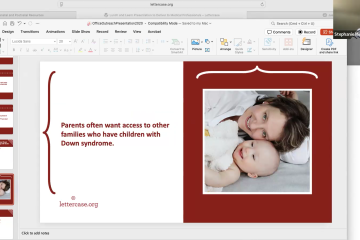
Organizations can work together on a shared medical outreach project. For example, Lettercase partnered with Down syndrome and Spina Bifida organizations in Kentucky to send resource packets to MFM specialists across the state. Lettercase provided the volunteers and shipping supplies, while partner organizations funded shipping costs and provided their own brochures to include in the packets.
The partnership ended up leading to even more collaboration. Lettercase later created a Spina Bifida book, which the Spina Bifida Association shared with specialty centers. Since those centers often work with families with many different genetic conditions, providers could then find and request additional Lettercase resources.
Benefits of shared projects include:
- Cost: Organizations can split expenses instead of taking everything on themselves.
- Reach: Partners can share resources with their own networks and contact lists.
- Advocacy power: Collective projects show that an issue affects many disability communities, not just one.
- New connections: One project can lead to longer-term partnerships and new opportunities.
Example 2: Shared Grants
Organizations can also collaborate on grant applications and projects that address challenges that are shared across disability communities.
For example, Lettercase has partnered with SOFT, an organization supporting families of people with Trisomy 18 and Trisomy 13, to develop a First Call program similar to the one used in the Down syndrome community. Massachusetts Down Syndrome Congress also became involved as a partner to provide training on developing and adapting a first-call program for trisomy 13 and 18.
Collaborative grants can help organizations share expertise, gain funding, and adapt successful programs for other disability communities.
Example 3: Grand Rounds and Hospital Education
Collaborating with multiple disability organizations can also strengthen Grand Rounds, Lunch and Learns, and other provider education opportunities.
Rather than focusing on a single diagnosis, organizations can bring together representatives from several disability communities to discuss how to sensitively deliver a diagnosis. This helps demonstrate that the principles of good diagnosis communication apply across many conditions.
Local organizations may also have relationships with different hospitals or healthcare systems. Inviting them to participate can provide introductions to providers and institutions that your organization may not otherwise be connected with.
Example 4: Family Voices and Parent-to-Parent Organizations
Family Voices and Parent-to-Parent organizations are valuable partners for connecting with families and strengthening referral networks. Many states have local chapters or affiliated organizations that can help connect medical outreach programs with families and community resources (see below).
Finding Local Organizations
A good starting point for finding potential partners is to Google your state + the condition you are interested in partnering with. Look for organizations representing conditions that can be diagnosed both prenatally and postnatally, as well as broader disability organizations. For example:
- Spina Bifida Association
- Turner Syndrome Society of the United States
- AXYS (X and Y variations)
- Center for Parent Information and Resources
- Lettercase
- Family Voices
- The Arc